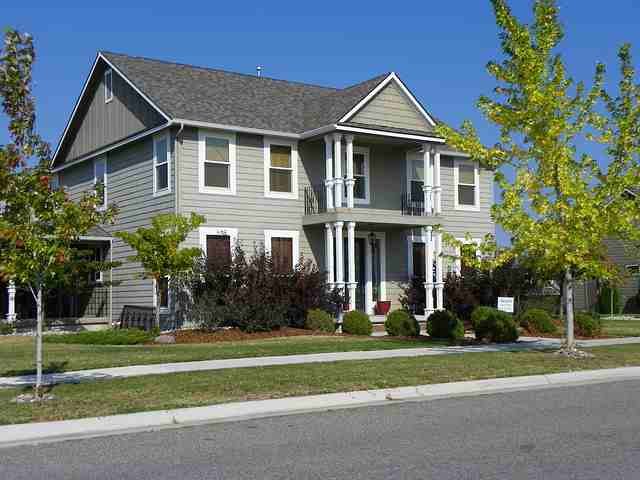
So you’re a landlord, but you don’t actually live under the same roof as your rental property. Maybe it’s a duplex you inherited, or a condo you’re leasing out while you travel for work. Either way, you’ve got non owner landlord insurance humming in the background—because the standard homeowner’s policy won’t touch a place where you’re not sleeping at night.
But here’s the twist. You’ve also installed a security system. Cameras on the porch, a smart doorbell, motion sensors near the back window. You did it to protect your investment and keep your tenants feeling safe. What you probably didn’t realize is that those little gadgets could be quietly whispering favors into your insurance premiums.
Let’s back up for a second. Most people assume that non owner landlord insurance is a fixed, take-it-or-leave-it kind of deal. You pay the quote, you sign the forms, and you cross your fingers. But that’s like buying a car and never checking if it has cruise control. Insurers love predictability. They love anything that lowers the chance of a claim landing on their desk like a brick through a window. And a security system? That’s pure predictability wrapped in wires and Wi-Fi.
Think about the alternative scenario. Imagine you skip the security setup entirely. One evening, a tenant forgets to lock the sliding door—it happens more often than you’d believe. A stranger walks in, grabs a laptop and a gaming console,and disappears into the night. Your tenant files a police report, then files a claim for stolen belongings. Now your insurance has to pay out. The next renewal, your premium shoots up like a startled cat. You end up spending more on the increased rate than you would have on a $200 camera system plus the monthly monitoring fee. See the reverse logic? Not installing a system is actually the expensive choice.
But wait—does every security system qualify for a discount? Not exactly. That’s where the fine print sneaks in. A basic motion light from the hardware store? Nice touch, but insurers barely blink. A professionally monitored system with central station alert and cellular backup? That’s the golden ticket. Some carriers even ask for specific certifications like UL (Underwriters Laboratories) approval. Others want proof that the system includes smoke and water detection along with burglar alarms. The lesson here: read your policy’s add-on page like you’re searching for hidden treasure, because sometimes you’ll find a section called “Protective Device Credit” tucked between arson exclusion and vacancy clauses.
You might be asking, “Okay, but how much are we really talking?” Real numbers from real markets—say, in Texas or Florida—show that a verified security system can shave off anywhere from five to twenty percent on the liability portion of your non owner landlord insurance. That’s not pocket change when you’re insuring a three-bedroom house for a year. And if you bundle multiple properties under the same carrier? The savings stack like pancakes on a Sunday morning.

Here’s another angle most blog posts ignore. Security systems don’t just prevent theft. They prevent frivolous claims. A tenant who feels unsafe might complain about a broken lock or a dark alleyway. You fix it, but the insurance company sees a pattern of “premises liability” notes and raises your risk score. With cameras and smart sensors, you can actually prove that the property was secure. That video evidence shuts down exaggerated claims before they become premium-hiking nightmares. In a way, your Ring doorbell becomes your silent lawyer.
Now, a word of caution for the budget-conscious landlord. Don’t rush to buy the cheapest DIY kit on a flash sale. Some insurers require that the system be installed by a licensed professional and maintained under a contract with a monitoring center. If you go the self-install route with no monthly fee, you might save forty bucks today but lose a hundred dollars in annual discounts tomorrow. Call your agent before you drill a single hole. Ask them: “What specific features does my non owner landlord insurance need to see for a rate reduction?” Write down their answer. Then shop for hardware accordingly. That phone call takes ten minutes but pays you back year after year.
Let’s walk through a real-life Tuesday. You own a small townhouse in Ohio. You don’t live there; your tenant, a nurse named Elena, does. You installed a smart lock with entry logs and a glass-break sensor last spring. One afternoon, Elena texts you: “Hey, the side window looks cracked—should I worry?” You check the security app. No alarm triggered, but you see the sensor recorded a sudden vibration at 2 AM. You call a handyman. Turns out a tree branch hit the frame, but the glass held. No break-in. No claim. Your insurance never even knows. But if that branch had shattered the window and someone had climbed in? The police report would have shown an attempted burglary with zero loss because the alarm scared them off. That “attempted” label still matters to underwriters. It tells them your property has teeth.
One more thought before we wrap up. Some landlords treat security systems as a tenant amenity—something to list in the ad like “hardwood floors” or “stainless steel appliances.” But that’s underselling it. A well-advertised security setup actually helps you attract longer-term, more responsible renters. People who care about safety tend to care about paying rent on time and not throwing wild parties that end with a flooded bathroom. Fewer headaches for you, fewer claims for the insurer, lower premiums for everyone. That’s the circle of life in rental real estate.
So here’s the takeaway. Your non owner landlord insurance doesn’t have to feel like a stubborn tax on owning property from a distance. By adding and documenting a legitimate security system, you’re essentially flipping the script. Instead of paying for what could go wrong, you’re being rewarded for what won’t go wrong. And in a world where every expense seems to creep upward, finding a discount that’s actually within your control feels like discovering an extra room in your own house.
Go check your policy tomorrow. Call your agent. Ask about that protective device credit. Then go hug your security camera—or at least give it a thumbs up. It’s working harder than you think.