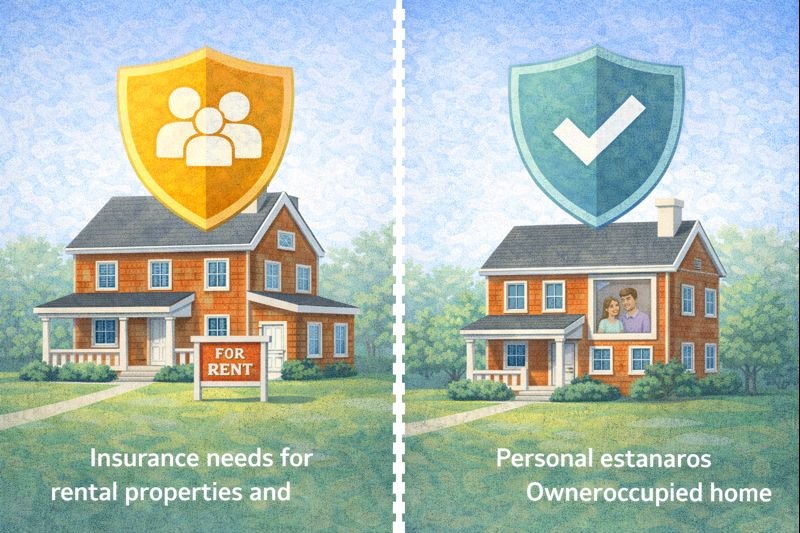

Introduction
When it comes to protecting rental properties, many property owners mistakenly assume that a standard homeowners insurance policy is sufficient. However, rental properties come with unique risks that are not fully addressed by homeowners coverage.
This article explores the key differences between landlord insurance vs homeowners insurance for rental property, helping U.S. landlords understand which policy aligns with their investment and risk profile.
Understanding Homeowners Insurance
Homeowners insurance is designed to protect owner-occupied residences. Its primary features include:
-
Dwelling coverage for the structure
-
Personal property protection for the owner’s belongings
-
Liability coverage for accidents occurring on the property
While homeowners insurance provides robust protection for personal residences, it is not designed for properties generating rental income.
What Landlord Insurance Covers
Landlord insurance is tailored specifically for rental properties. Key coverages include:
-
Dwelling protection: Covers the rental structure itself against fire, storm, vandalism, and other perils.
-
Liability coverage: Protects landlords from tenant injuries, visitor accidents, and lawsuits.
-
Loss of rental income: Compensates landlords when a covered event makes the property uninhabitable.
-
Optional endorsements: Flood, earthquake, or malicious damage coverage, depending on location and property type.
Landlord insurance addresses both financial and operational risks unique to rental properties.
Key Differences: Landlord Insurance vs Homeowners Insurance
| Feature | Homeowners Insurance | Landlord Insurance |
|---|---|---|
| Intended Use | Owner-occupied homes | Rental properties generating income |
| Liability Coverage | Limited to typical home scenarios | Expanded to include tenant injuries, visitor accidents |
| Loss of Income | Not covered | Covered (rental income protection) |
| Policy Limits | Based on owner’s dwelling and personal property | Based on rental property replacement cost and liability needs |
| Tenant Damage | Not covered | Optional endorsement available |
Why Homeowners Insurance Is Insufficient for Rentals
Relying on homeowners insurance for a rental property can leave landlords exposed to:
-
Claim denials for tenant-related incidents
-
Lack of coverage for lost rental income
-
Insufficient liability limits
-
Exclusion of certain property types (e.g., multi-unit rentals)
These gaps highlight why landlords should carefully evaluate the suitability of homeowners insurance versus dedicated landlord insurance.
Liability Risks Unique to Rental Properties
Rental properties inherently involve higher liability exposure, including:
-
Slip-and-fall accidents on common areas
-
Tenant negligence or property damage claims
-
Lawsuits related to habitability issues
Landlord insurance policies are structured to cover these risks comprehensively, whereas homeowners insurance is not.
Coverage Scenarios: Comparing Real-Life Examples
Scenario 1: Fire Damage
-
Homeowners Insurance: Covers owner-occupied home; tenant losses not covered
-
Landlord Insurance: Covers structural damage and lost rental income until the unit is habitable
Scenario 2: Tenant Injury
-
Homeowners Insurance: Limited or no coverage; claim may be denied
-
Landlord Insurance: Liability protection covers medical and legal costs
Scenario 3: Vandalism by Tenant
-
Homeowners Insurance: Typically not covered
-
Landlord Insurance: Optional endorsement available to cover tenant-caused damage
These scenarios illustrate why landlords need a policy tailored to rental property risks.
Legal and Mortgage Considerations
Many mortgage lenders require landlords to carry dedicated landlord insurance rather than homeowners insurance. Failure to comply can result in:
-
Lender-mandated insurance
-
Penalties or fines
-
Potential breach of loan agreements
Landlord insurance also aligns with state and local regulatory requirements, providing additional legal protection.
Choosing the Right Policy
When deciding between landlord insurance vs homeowners insurance for rental property, landlords should consider:
-
Number and type of rental units
-
Location-specific risk factors (floods, earthquakes, storms)
-
Liability exposure and tenant demographics
-
Potential loss of rental income
Consulting an insurance professional ensures coverage is adequate, cost-effective, and compliant with state laws.
Common Mistakes to Avoid
-
Using homeowners insurance for income-generating properties
-
Ignoring optional endorsements that mitigate state-specific risks
-
Assuming all tenants’ actions are automatically covered
-
Underestimating replacement cost of the property
Correctly structuring a landlord insurance policy mitigates financial and legal risks effectively.
Conclusion
Understanding the distinctions between landlord insurance vs homeowners insurance for rental property is critical for U.S. landlords. While homeowners insurance protects owner-occupied residences, rental properties require tailored coverage that accounts for financial, legal, and operational risks.
Investing in dedicated landlord insurance ensures that rental properties are fully protected, rental income is safeguarded, and liability exposure is minimized—ultimately supporting long-term portfolio stability and peace of mind.