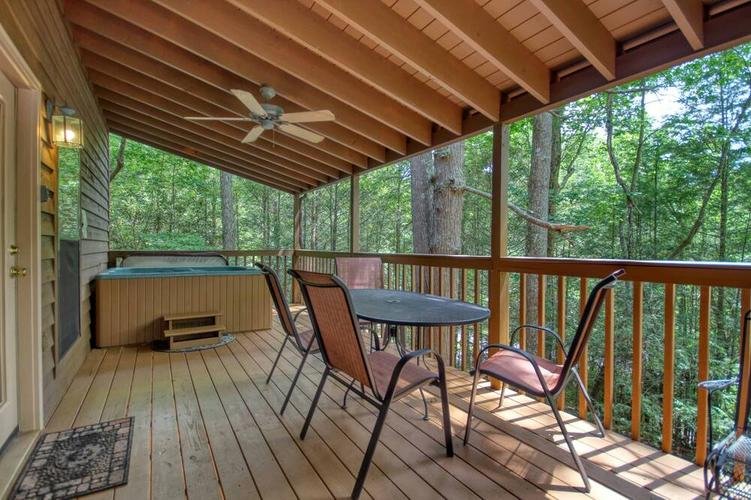
You own a home in the mountains but don’t live there yourself. Maybe it’s a cabin you inherited, or a small A-frame you bought as an investment. Now you rent it out to skiers, hikers, or families who want a weekend away. That sounds simple enough until you sit down and look at what standard landlord policies actually cover.
Here is the question I get from nearly every landlord with a mountain property. If the house sits on a hillside and a spring landslide cracks the foundation, does your insurance pay? What if a bear tears through the back door and a guest gets hurt? Or worse, what if a wildfire starts twenty miles away but the smoke damage makes the place unlivable for months?
Most people assume a regular non owner landlord insurance policy handles all of this. It does not.
Let me explain why. A typical non owner landlord policy is designed for a house in a flat suburb with predictable risks like a broken pipe or a tenant who forgets to change the smoke alarm battery. But a mountain home lives in a completely different world. The ground moves. The weather turns violent in ways you never see in the city. And the distance between your property and the nearest fire station might be forty-five minutes on a good day.
I learned this the hard way from a client named Margaret. She owned a small log cabin in the Blue Ridge Mountains. She lived in Charlotte and rented the cabin through a property manager. Her non owner landlord insurance was the same policy her friend used for a duplex in downtown Raleigh. Then a late snowstorm came in April. A tree fell through the roof. The adjuster showed up and asked why there was no coverage for “weight of ice and snow” on the structure. Margaret had never even heard that exclusion existed.
That is when she called me. And that is when I started digging into what insurers actually offer for homes with mountains.
The biggest gap you will find is in what the industry calls “off-premises utilities.” In a normal rental, if a municipal water main breaks, the landlord policy usually covers the lost rent while repairs happen. But mountain homes often rely on private wells, septic systems, and propane tanks. When those fail, many standard non owner policies treat it as a maintenance issue, not a covered peril. You eat the cost yourself.
Then there is the question of fire. In a suburban neighborhood, fire spreads from one house to the next, and insurance models that risk very accurately. But in the mountains, a wildfire can jump canyons and burn for weeks. Many insurers now add a separate wildfire exclusion or a percentage-based sublimit for mountain properties. That means even if you have a non owner landlord policy, the payout for fire damage might be capped at fifty percent of the dwelling limit. Read that again. You could lose the whole cabin and get half the money.
What about mudslides and debris flows? Standard policies almost never cover earth movement. You need a separate difference in conditions policy or a specialized endorsement. But here is the tricky part. Some mountain homes sit on slopes that look stable until a wet winter changes everything. I have seen landlords argue with adjusters for months over whether a cracked wall came from earth movement or from poor construction. The burden of proof often falls on you.
So what do you actually need if you own a rental in the mountains and you are a non owner landlord? First, find an insurer who writes policies specifically for high-risk or custom homes. Big national brands usually say no or offer something so limited it is almost useless. Look for regional mutual companies or specialty carriers who understand mountain terrain.

Second, ask about guaranteed replacement cost for the dwelling, not actual cash value. Actual cash value means depreciation hits you hard. A twenty-year-old roof gets paid out at its current worth, not what it costs to replace. In a mountain home with expensive materials like stone or cedar shakes, that difference can run into tens of thousands of dollars.
Third, check the ordinance or law coverage. Mountain areas often update building codes after a disaster. If a fire burns your rental and the new code requires a different foundation or a wider access road, your policy might not pay for those upgrades without this endorsement.
Fourth, think about loss of use coverage for the tenant, but also for yourself. If the home becomes uninhabitable because of a covered event, you need rent loss insurance that runs for at least twelve months. Reconstruction in the mountains takes longer than in the city. Contractors are fewer. Roads close. Permits take forever.
Now let me ask you something. Have you ever looked at your current declaration page and searched for the words “earth movement,” “wildfire sublimit,” or “off-premises utility”? If not, pull it out tonight. I am serious. Set it on your kitchen counter and actually read the exclusions section. That is where the surprises live.
You might think adding all this coverage will cost a fortune. Sometimes it does, but not always. I have seen non owner landlord policies for a standard suburban home run about eight hundred dollars a year. For a comparable mountain home with the right endorsements, you might pay twelve to fifteen hundred. That extra four hundred dollars buys you protection against a total loss that could otherwise run into six figures. The math works.
One more thing you rarely hear about. Some mountain rentals sit on land that crosses a geological fault line or a floodplain. Even if the house itself is on high ground, the access road might be in a flood zone. If that road washes out, your tenants cannot get in, and you lose months of rent. Most non owner landlord policies do not cover damage to roads or driveways because those are considered land improvements. You need a separate inland marine policy or an endorsement for “other structures” that explicitly includes the access route.
I talked to a landlord in Colorado last year who learned this after a flash flood. His cabin was fine. The bridge that led to it collapsed. He had no rental income for seven months while the county rebuilt the bridge. His non owner policy paid exactly zero. He told me, “I never even thought about the road.” That is the kind of mistake you make once.
So here is my recommendation. Before you rent out that mountain home for another season, call your current agent and ask three questions. One, what is excluded specifically because the property is in a mountainous area? Two, does the policy cover loss of rent for at least one year? Three, can you add an endorsement for earth movement and wildfire without switching to a surplus lines carrier? If the agent hesitates or gives vague answers, start shopping elsewhere.
The good news is that more insurers now understand mountain risks because climate patterns have made wildfires and heavy rains more common everywhere. You are not alone. Other non owner landlords in the Smokies, the Sierras,and the Green Mountains face the same gaps. Share what you learn with them. Compare policy quotes side by side. And never assume that a standard form works just because your neighbor uses it.
Your mountain property is not just a rental. It is a piece of ground that has its own weather, its own wildlife, and its own way of testing human plans. Insure it like the unique thing it is. You will sleep better when the wind picks up and the first snow flies.