
Introduction
Owning rental property can be a profitable long-term investment, but it also comes with significant risks. From property damage caused by storms and fires to liability claims from tenants or visitors, landlords face numerous financial exposures that standard homeowners insurance may not cover. This is where Landlord Insurance becomes essential.
Landlord insurance is specifically designed for property owners who rent out residential or commercial real estate. It provides financial protection against property damage, liability claims, loss of rental income, and other risks associated with rental properties. Understanding coverage options, policy requirements, and insurance costs can help landlords make informed decisions while protecting their investments.
In this guide, we’ll explore everything U.S. property owners need to know about landlord insurance, including coverage types, average costs, legal considerations, and tips for choosing the best policy.
What Is Landlord Insurance?
Landlord insurance, sometimes referred to as rental property insurance or a dwelling fire policy (DP-3), is a specialized insurance policy designed for properties that are rented to tenants.
Unlike homeowners insurance, which protects owner-occupied homes, landlord insurance addresses risks unique to rental properties.
A comprehensive landlord insurance policy typically covers:
- Physical damage to the rental property
- Liability protection
- Loss of rental income
- Detached structures
- Legal expenses in certain situations
Whether you own a single-family rental home, duplex, condo, apartment building, or vacation rental, landlord insurance helps safeguard your investment from unexpected losses.
Why Landlord Insurance Is Important
Many property owners mistakenly assume their homeowners insurance policy will cover a rental property. In most cases, once a property is rented to tenants, standard homeowners coverage becomes inadequate.
Without landlord insurance, landlords could face substantial out-of-pocket expenses from:
- Fire damage
- Windstorms and hurricanes
- Vandalism
- Tenant-related damage
- Slip-and-fall lawsuits
- Loss of rental income after a covered event
A single liability claim can easily exceed tens of thousands of dollars, making landlord insurance a critical part of responsible property management.
Types of Coverage Included in Landlord Insurance
1. Dwelling Coverage
Dwelling coverage protects the physical structure of the rental property.
Covered events may include:
- Fire and smoke damage
- Lightning strikes
- Wind and hail damage
- Explosions
- Falling objects
- Certain water damage incidents
If a covered peril damages the building, dwelling coverage helps pay for repairs or reconstruction.
Examples
- A fire destroys part of a rental home.
- A severe storm damages the roof.
- Lightning causes structural damage.
2. Other Structures Coverage
Many rental properties include detached structures such as:
- Garages
- Storage sheds
- Fences
- Gazebos
- Detached workshops
Other structures coverage helps pay for repairs or replacement if these structures are damaged by covered events.
3. Landlord Liability Protection
Liability coverage is one of the most valuable components of landlord insurance.
It helps cover:
- Bodily injury claims
- Property damage claims
- Legal defense costs
- Court judgments
- Settlements
Example
A tenant’s guest slips on an icy walkway and suffers a serious injury. The landlord may be held liable if proper maintenance was not performed.
Liability insurance can help cover medical expenses and legal costs.
Most experts recommend at least:
- $300,000 liability coverage
- $500,000 liability coverage for larger properties
- Umbrella insurance for additional protection
4. Loss of Rental Income Coverage
Also known as fair rental value coverage, this protection reimburses lost rental income when a property becomes uninhabitable due to a covered claim.
Example
A fire forces tenants to move out for four months while repairs are completed.
Loss of rental income coverage can reimburse the landlord for missed rental payments during that period.
This coverage is particularly important for landlords who rely on rental income to cover:
- Mortgage payments
- Property taxes
- Maintenance expenses
5. Optional Landlord Insurance Endorsements
Many insurers offer additional coverage options.
Flood Insurance
Standard landlord insurance typically does not cover flood damage.
Property owners in flood-prone areas may need separate flood insurance through:
- FEMA’s National Flood Insurance Program (NFIP)
- Private flood insurance providers
Earthquake Coverage
Earthquake damage is generally excluded from standard policies and requires separate coverage.
Vandalism Coverage
Some insurers offer enhanced protection against tenant or third-party vandalism.
Equipment Breakdown Coverage
Protects systems such as:
- HVAC units
- Water heaters
- Electrical systems
Rent Guarantee Insurance
Available in certain markets, this helps cover lost rent if tenants fail to pay.
What Landlord Insurance Does Not Cover
Understanding exclusions is equally important.
Common exclusions include:
Tenant Belongings
Tenants need their own renters insurance policy to protect personal property.
Routine Maintenance
Insurance does not cover normal wear and tear.
Examples include:
- Aging roofs
- Worn carpeting
- Appliance deterioration
Pest Damage
Damage caused by:
- Rodents
- Insects
- Termites
is usually excluded.
Intentional Damage by Landlords
Deliberate acts are not covered.
Average Cost of Landlord Insurance in the U.S.
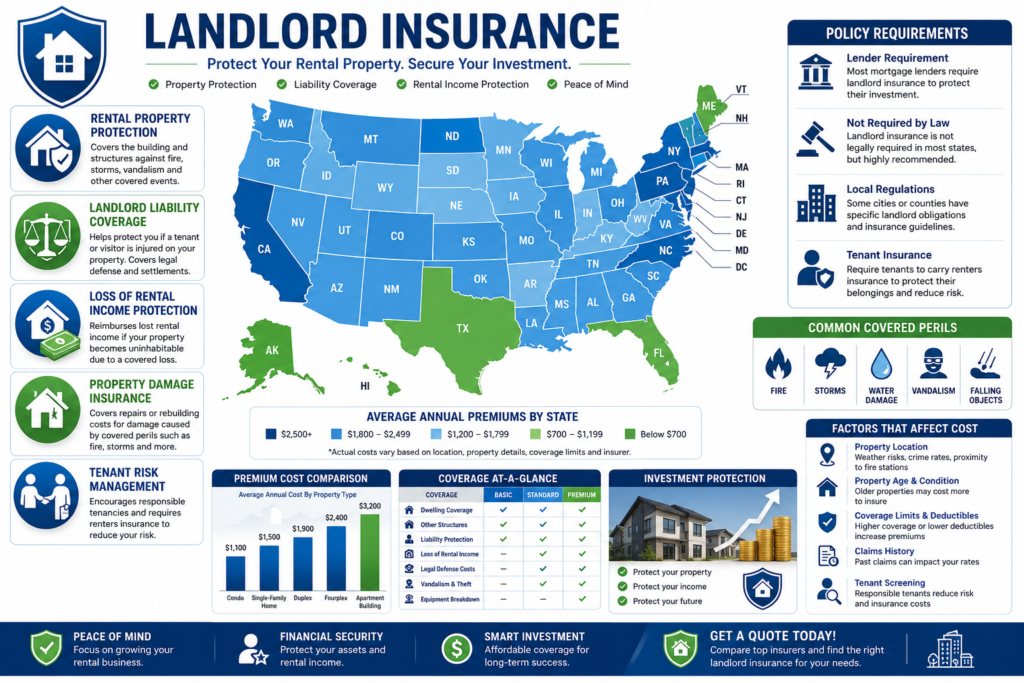
The cost of landlord insurance varies significantly depending on property location, size, and risk factors.
National Average
Most U.S. landlords pay between:
$1,200 and $3,500 per year
for a standard single-family rental property.
Factors Affecting Insurance Costs
Property Location
Insurance premiums are generally higher in areas with:
- Hurricanes
- Wildfires
- Tornadoes
- Flood risks
- High crime rates
Property Value
More expensive properties require higher coverage limits.
Property Age
Older buildings often cost more to insure due to increased repair risks.
Coverage Amount
Higher limits result in higher premiums.
Claims History
Previous insurance claims can significantly impact rates.
Deductible Selection
Higher deductibles typically lower annual premiums.
State-by-State Insurance Considerations
Insurance regulations vary across states.
Florida
Landlords often face higher premiums due to hurricane exposure.
Additional windstorm coverage may be necessary.
California
Wildfire risk significantly influences insurance costs.
Property owners may need supplemental wildfire coverage.
Texas
Storm, hail, and tornado risks can affect rates.
New York
Urban properties may have higher liability exposure and insurance costs.
Coastal States
Properties near oceans often require:
- Flood insurance
- Windstorm endorsements
Landlords should review local insurance requirements and hazard risks before purchasing coverage.
Is Landlord Insurance Required by Law?
In most U.S. states, landlord insurance is not legally required.
However, many mortgage lenders require it.
Mortgage Requirements
If the property has a mortgage, lenders typically require:
- Dwelling coverage
- Hazard insurance
- Liability protection
Failure to maintain coverage could violate loan terms.
Local Regulations
While landlord insurance itself is usually not mandated by state law, local regulations may require landlords to maintain safe rental conditions and carry certain liability protections.
Landlord Insurance vs. Homeowners Insurance
| Feature | Homeowners Insurance | Landlord Insurance |
|---|---|---|
| Owner Occupied Home | Yes | No |
| Rental Property Coverage | Limited | Yes |
| Liability Protection | Yes | Yes |
| Loss of Rental Income | No | Yes |
| Tenant Risks Coverage | Limited | Yes |
Using homeowners insurance for a rental property may result in denied claims, making landlord insurance essential for proper protection.
Tips for Choosing the Best Landlord Insurance Policy
Compare Multiple Quotes
Obtain quotes from several insurance providers to compare:
- Coverage limits
- Deductibles
- Exclusions
- Premium costs
Assess Property Risks
Consider local hazards such as:
- Flooding
- Wildfires
- Hurricanes
- Severe storms
Purchase additional coverage when necessary.
Review Liability Limits
Higher liability limits can provide valuable protection against costly lawsuits.
Require Tenant Renters Insurance
Encouraging or requiring tenants to carry renters insurance can reduce disputes and provide additional protection.
Bundle Policies
Many insurers offer discounts when combining:
- Landlord insurance
- Auto insurance
- Umbrella insurance
- Commercial property policies
Common Landlord Insurance Claims
The most frequent claims include:
Fire Damage
One of the costliest claims for rental properties.
Water Damage
Leaks and burst pipes can cause significant losses.
Storm Damage
Wind, hail, and severe weather often result in insurance claims.
Liability Lawsuits
Injuries on rental property can lead to expensive legal actions.
Vandalism
Vacant properties are especially vulnerable.
Understanding common claims can help landlords implement preventive measures and reduce risks.
Conclusion
Landlord insurance is a vital financial protection tool for rental property owners across the United States. While not always legally required, it provides essential coverage for property damage, liability exposure, and loss of rental income that standard homeowners insurance typically does not cover.
Whether you own a single rental home or a portfolio of investment properties, choosing the right landlord insurance policy can help safeguard your assets, maintain cash flow, and provide peace of mind. By comparing coverage options, understanding state-specific risks, and working with reputable insurance providers, landlords can secure comprehensive protection tailored to their investment needs.
Investing in the right landlord insurance policy today can prevent significant financial losses tomorrow